

What Exactly is “Indian Festive”? A Guest’s Guide to Fusion Wedding Style
Decoding the Indian Wedding Dress Code for Non-Indian Guests
Do you want to know the biggest fear of every wedding guest? It’s not the long flights. It’s not the expensive gifts. It’s showing up to a Sangeet in a tuxedo when everyone else is in a bright yellow Kurta. Understanding Indian wedding guest attire for non-Indian guests can be a real struggle.
If you’ve ever looked at a gold-foiled invitation and felt a wave of "What do I wear?" panic, you aren't alone. Fusion weddings are beautiful, but they can be confusing for guests.
That is why I created this guide. I want you to spend less time stressing about your outfit and more time practicing your dance moves.
The Problem: The "Dress Code" Guessing Game
Most fusion couples try to be helpful. They put phrases like "Indian Festive" or "Black Tie Optional" on the card. But what does that actually mean in a fusion context?If you wear a full Saree, are you overdoing it? If you wear a tuxedo, will you be the only one?
I’ve spent years designing stationery for these exact weddings. I know that if the invitation looks a certain way, the wedding usually follows that vibe.
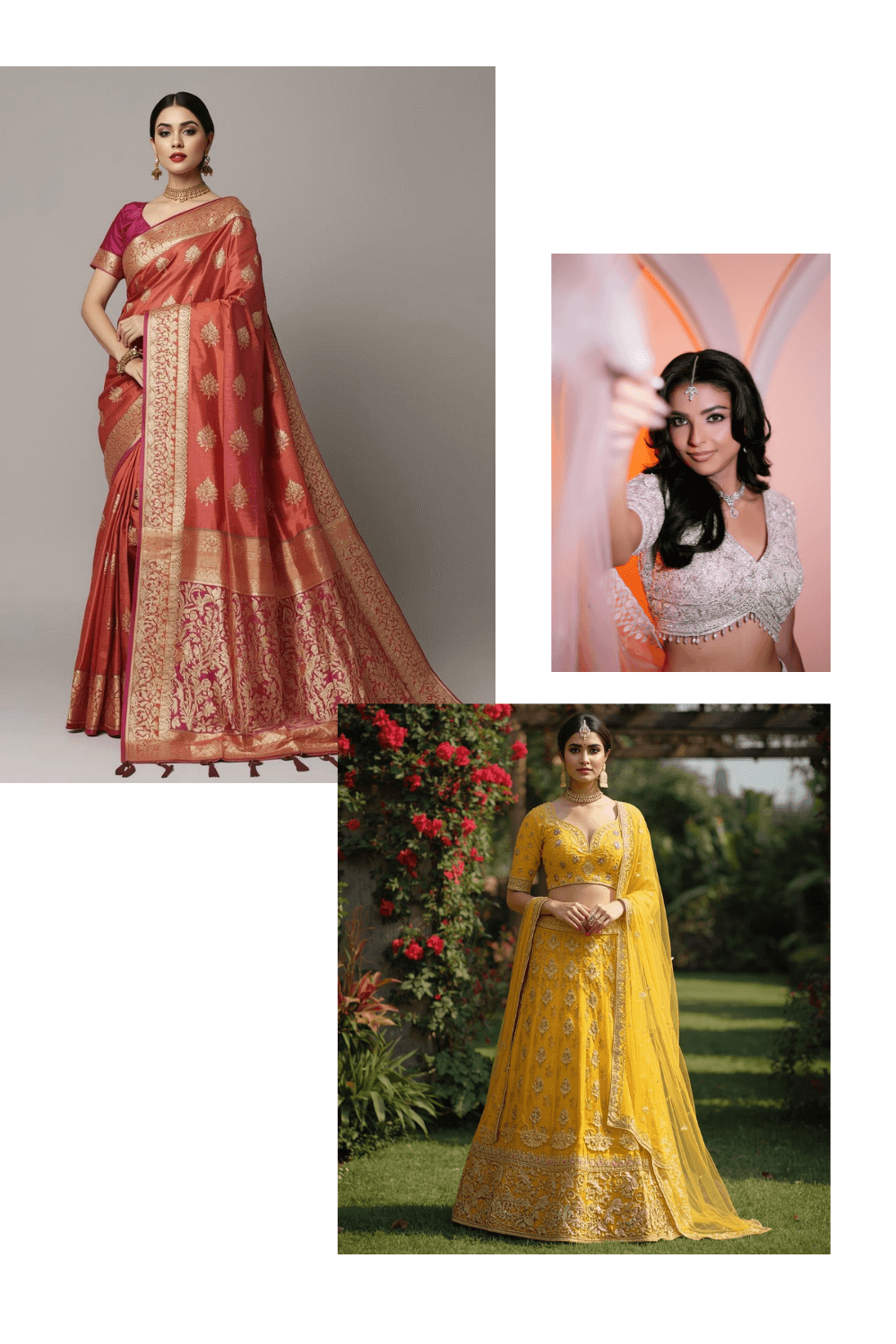
1. The Mehendi and Haldi (The "Garden Party" Vibe)
These events are usually outdoors and a bit more casual.
For Her:
Think bright sundresses or a simple Kurta set. You want something breathable.For Him:
A linen shirt and chinos are perfect.
The Golden Rule of Haldi: Avoid wearing your most expensive white outfit. Haldi involves turmeric paste. There is a 99% chance you’ll end up with a yellow splash! Wear yellow or orange to "blend in" with the festivities.
2. The Sangeet (The "Glamour" Night)
The Sangeet is all about high energy, music, and dancing. It is essentially a high-fashion talent show.
For Her:
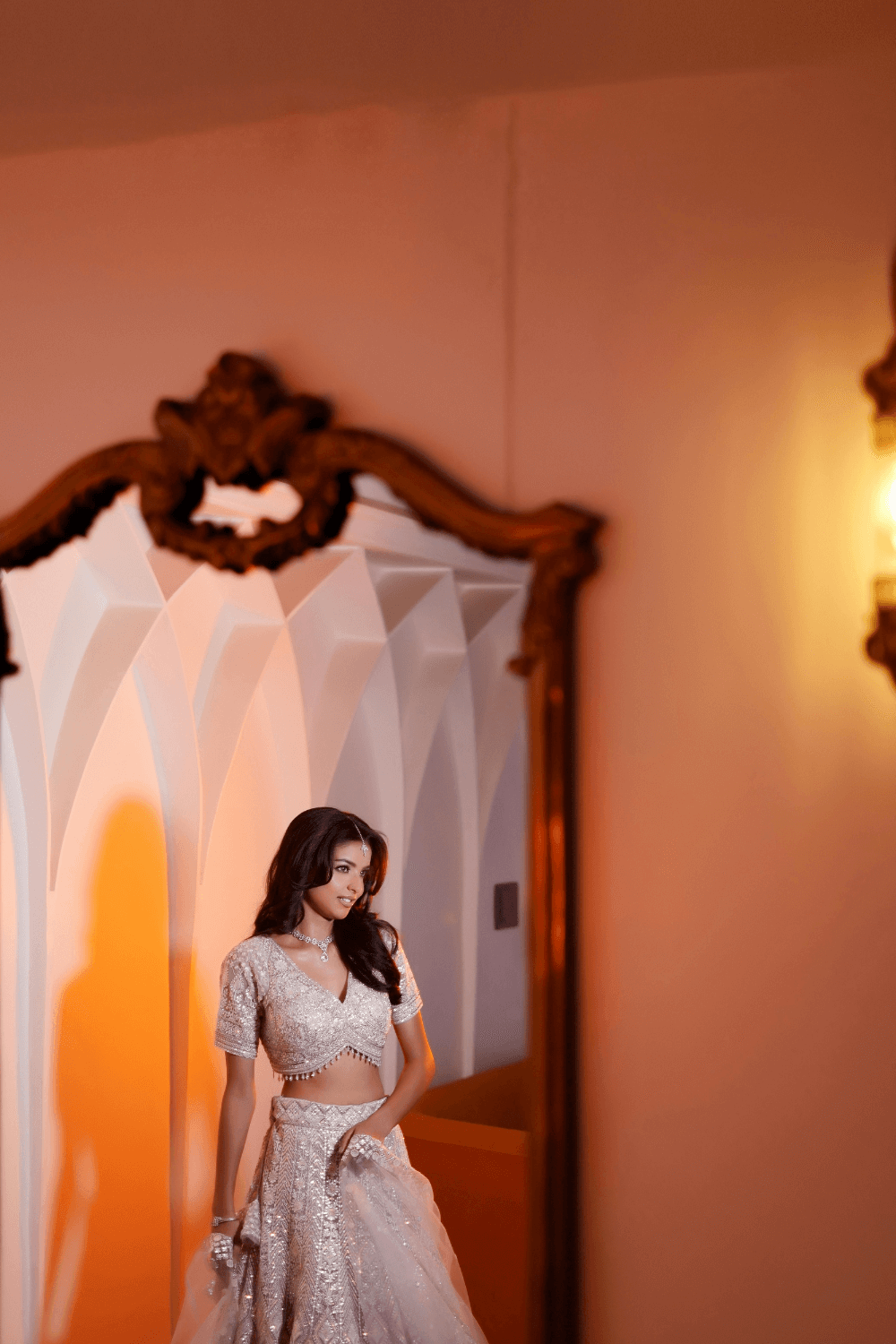
This is the perfect time for a Lehenga (a cropped top and full skirt) or a heavy cocktail dress with statement jewellery.For Him:
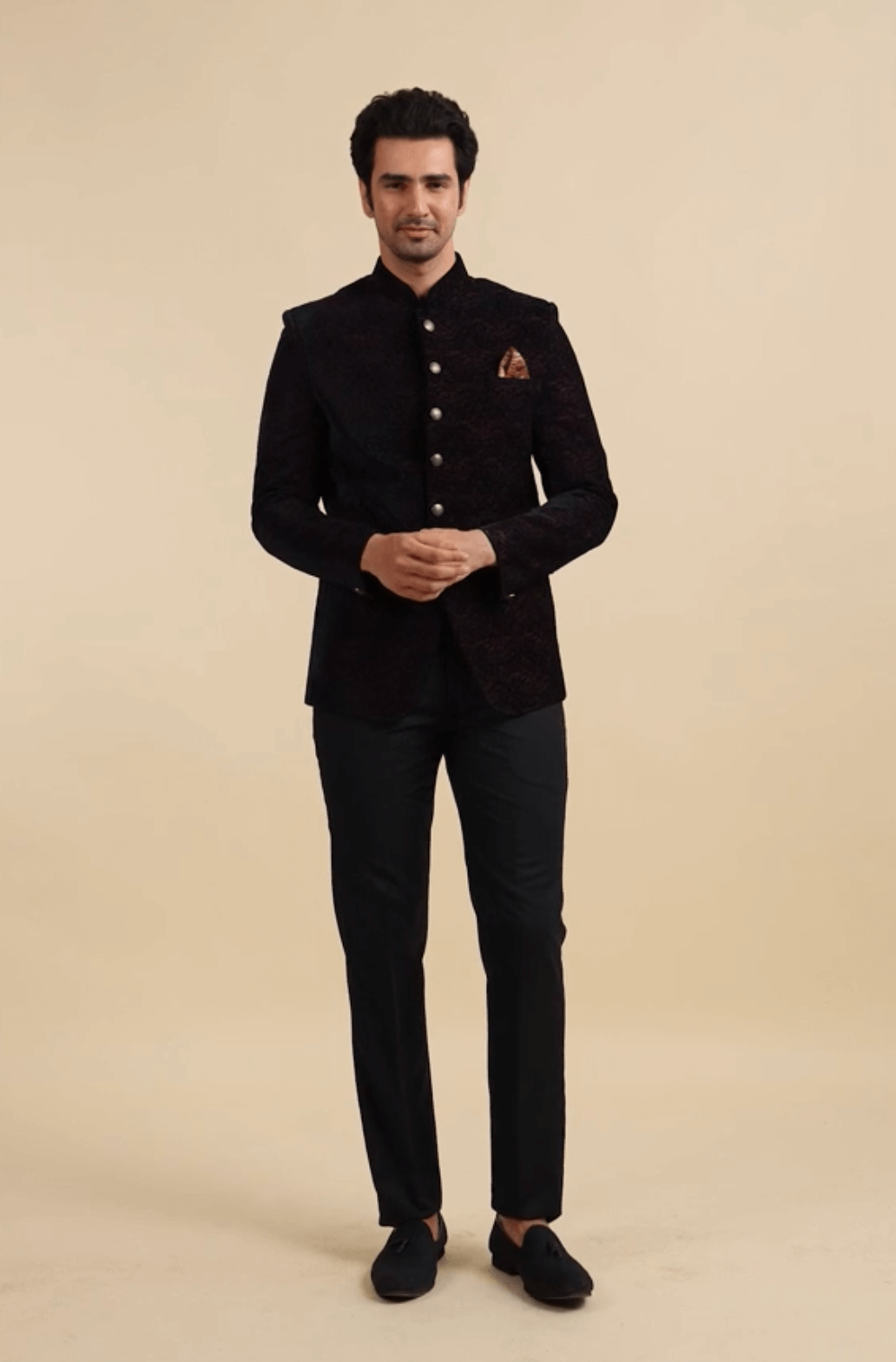
Try a Bandhgala (a structured Indian jacket) or a sharp suit with a colorful pocket square.
Movement is Key: If you’re wearing a Lehenga, make sure you can move your arms. You’ll likely be doing the "lightbulb" dance move at some point!
3. The Ceremony (The "Traditional" Respect)
The ceremony is the most formal and sacred part of the weekend.
The Color Rule:
In Indian culture, red is for the bride. In Western culture, white is for the bride (or for funerals in India). To play it safe? Avoid all-white or all-red.The Comfort Rule:
Many Hindu ceremonies involve sitting on the floor or on low chairs for an hour or more.Modesty:
While fusion weddings are modern, it is respectful to keep shoulders covered during the religious rituals. A simple shawl (Dupatta) is your best friend here.
4. The Reception (The "Black Tie" Gala)
For many fusion weddings, the reception is a total "costume change." This is often the most formal event, frequently designated as Black Tie or Black Tie Optional.
For Her:
This is the time for a floor-length evening gown. If you want to keep the fusion vibe, choose a gown in a rich jewel tone (emerald, sapphire, or plum). A modern, heavily embellished Saree is also a show-stopping choice for a Black Tie reception.For Him:
If the card says "Black Tie," a tuxedo is expected. If it says "Black Tie Optional," a very dark, well-tailored suit and tie is the minimum.The "Desi" Alternative:
A formal black or navy Bandhgala or a Jodhpuri suit (a suit with a mandarin collar) is the perfect Indian equivalent to a Western tuxedo.
Indian Wedding Clothing 101: Terms You Need to Know
If you are just starting your search for the perfect outfit, you might feel like you’re learning a new language. Don't worry—I've got you covered.
Think of this as your "Fusion Fashion Cheat Sheet." Knowing these terms will make your shopping (and your conversations with the couple) a whole lot easier.
For the Ladies:
Lehenga: This is a three-piece ensemble. It consists of a cropped blouse (choli), a voluminous full skirt, and a dupatta (a long scarf). It is the "go-to" for Sangeets because it's easy to dance in!
Saree: The classic. It’s a single piece of unstitched fabric (usually 6 to 9 yards) draped elegantly around the body. Pro Tip: If you aren't an expert at draping, look for "pre-stitched" sarees that zip up like a skirt.
Suit (Salwar Kameez): This is a three-piece set featuring a long tunic, trousers (usually tapered at the ankle), and a dupatta. It is incredibly comfortable and perfect for daytime events like the Mehndi.
For the Gentlemen:
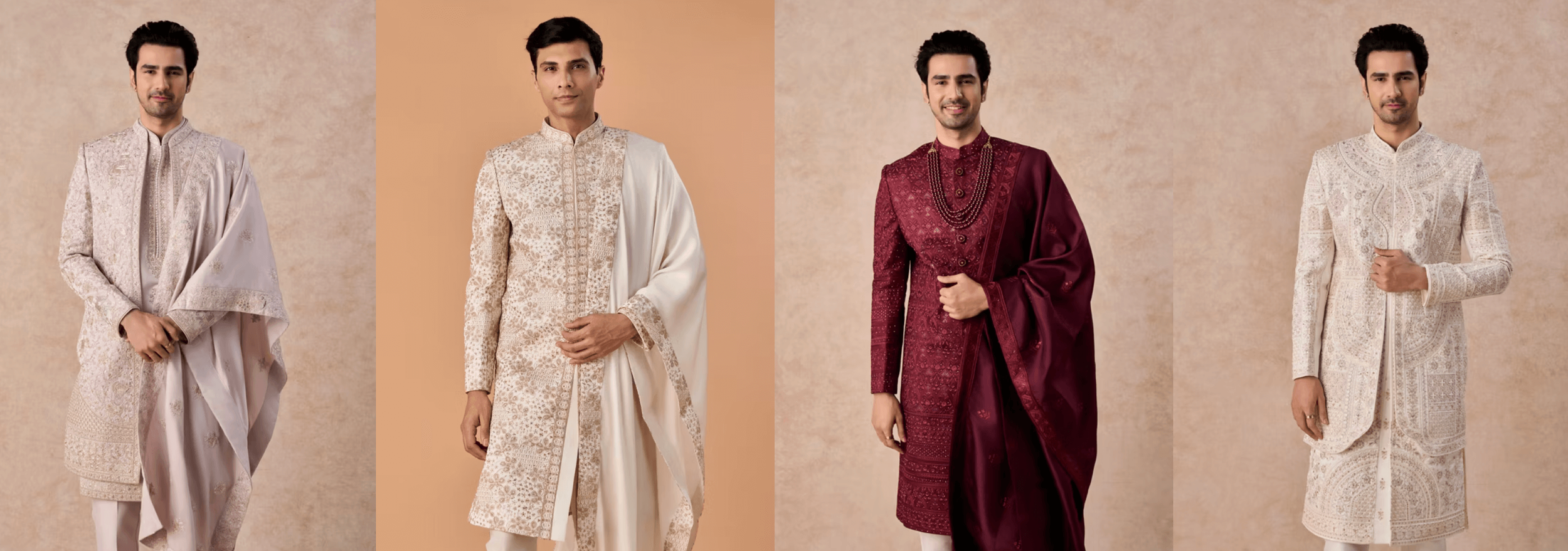
Kurta Pajama:
A loose-fitting tunic top paired with matching trousers. It’s the ultimate "Goldilocks" outfit—not too formal, not too casual. It’s also gender-neutral and can be worn by anyone!Sherwani:
This is the big leagues. It’s a long, structured, button-down coat that often features stunning embroidery. This is what you wear when you want to look your absolute best for the Ceremony.Bandhgala (Jodhpuri):
This is the ultimate fusion piece. It looks like a Western suit but features a "mandarin" collar instead of lapels. If the invite says Black Tie, a black or navy Bandhgala is a power move.
The Final Touch: The "Details" Matter
I always tell my stationery clients: The more your guests know, the more they will enjoy the party. When we design your invitation suite, we can even include these definitions on a custom Digital Wardrobe Planer or on your Wedding Website. It’s a small touch that makes your non-Indian guests feel seen and included.
Where to Buy: The Best Online Shops with USA Websites
You don't need to fly to Mumbai for these! These top-tier retailers offer dedicated USA websites and reliable shipping.
Anita Dongre (USA)
High-end, sustainable luxury. Perfect for those who want a celebrity-level designer look.
Kalki Fashion (USA)
The go-to for modern, "Instagrammable" trends and stunning Indo-Western fusion pieces.
Aza Fashions (USA)
A curated marketplace of India’s most famous designers. If you want variety, start here.
Indya (USA)
Fantastic for affordable, modern fusion wear. Their tunics and skirts are perfect for Mehndi and Haldi events.
Meena Bazaar (USA)
A household name for classic, high-quality traditional sarees and suits that never go out of style.
The Do's and Don'ts of Fusion Fashion
If you want to be the "perfect guest," follow these three rules:
DO embrace color. Jewel tones look amazing in photos.
DON'T worry about "cultural appropriation." If the couple invited you and suggested a dress code, they want you to celebrate their culture with them.
DO check the "Baraat" details. If you're on the groom's side, you'll be dancing in a parade outside. Wear shoes you can actually walk in.
How to Help Your Guests as a Couple
If you are the one getting married—don't let your guests guess.
Including a clear, beautifully designed "Details Card" in your invitation suite prevents 500 "What do I wear?" text messages.
Frequently Asked Questions (FAQs)
Can I wear black to an Indian wedding?
Traditionally, black is avoided at the religious ceremony as it’s considered inauspicious. However, it is perfectly acceptable—and very popular—for the Sangeet or the Reception, especially if the dress code is Black Tie!
Is it okay for a non-Indian guest to wear a Saree or Lehenga?
Yes! Most Indian couples love seeing their friends embrace the culture. If you’re worried about the Saree, look for a "pre-stitched" version—it's essentially a skirt that looks like a drape.
Do I need to cover my head?
For Hindu ceremonies, it is generally not required for guests. However, if the wedding is in a Sikh Gurdwara, everyone (men and women) must cover their heads. It’s always handy to keep a scarf with you.
What colors should I avoid?
Avoid bright red (the bride's color) and pure white (traditionally for mourning). For the ceremony, try to avoid black as well. Everything else is fair game!

Conclusion
Planning what to wear to a fusion wedding shouldn't feel like a chore. It’s an opportunity to step outside your fashion comfort zone and celebrate two cultures coming together.
Remember: The couple invited you because they want you there. Your presence is what matters most.
Now, I want to hear from you. What is the most confusing dress code you’ve ever seen on a wedding invitation? Leave a comment below and let me know!

Hey, I’m Kriti!
